18 October 2025 · Swirl Marks · Paint Correction · Car Care
Swirl Marks on Your Car? Here's How to Remove Them
Swirl marks are microscopic scratches in a car's clear coat arranged in circular or arc patterns, visible as a web of fine lines under direct light. They are the most common paint defect on Dubai cars and are almost always caused by improper washing technique — specifically, anything that drags particles across a dry or insufficiently lubricated paint surface.
- —Most common cause in Dubai: automatic car washes with rotating brushes
- —Second most common: wiping dust off a dry car with any cloth — even a microfibre
- —Third: drying with a chamois or squeegee dragged across the surface
- —Swirls cannot be washed away — they are physical damage to the clear coat
- —The only safe removal method is machine polishing with the correct compound and pad
Why Swirl Marks Are Worse in Dubai
Dubai's omnipresent fine sand — silicon dioxide particles with sharp edges — turns any surface contact into an abrasive event. When a petrol-station automatic wash runs its rotating brushes over a panel, it is dragging sand particles across the clear coat at speed. When a driver wipes dust off a bonnet before getting in, each grain of sand cuts a tiny arc. Repeat this weekly over two or three years and the result is the characteristic swirled appearance visible in any Dubai car park at the right angle.
Can You Remove Swirl Marks Yourself?
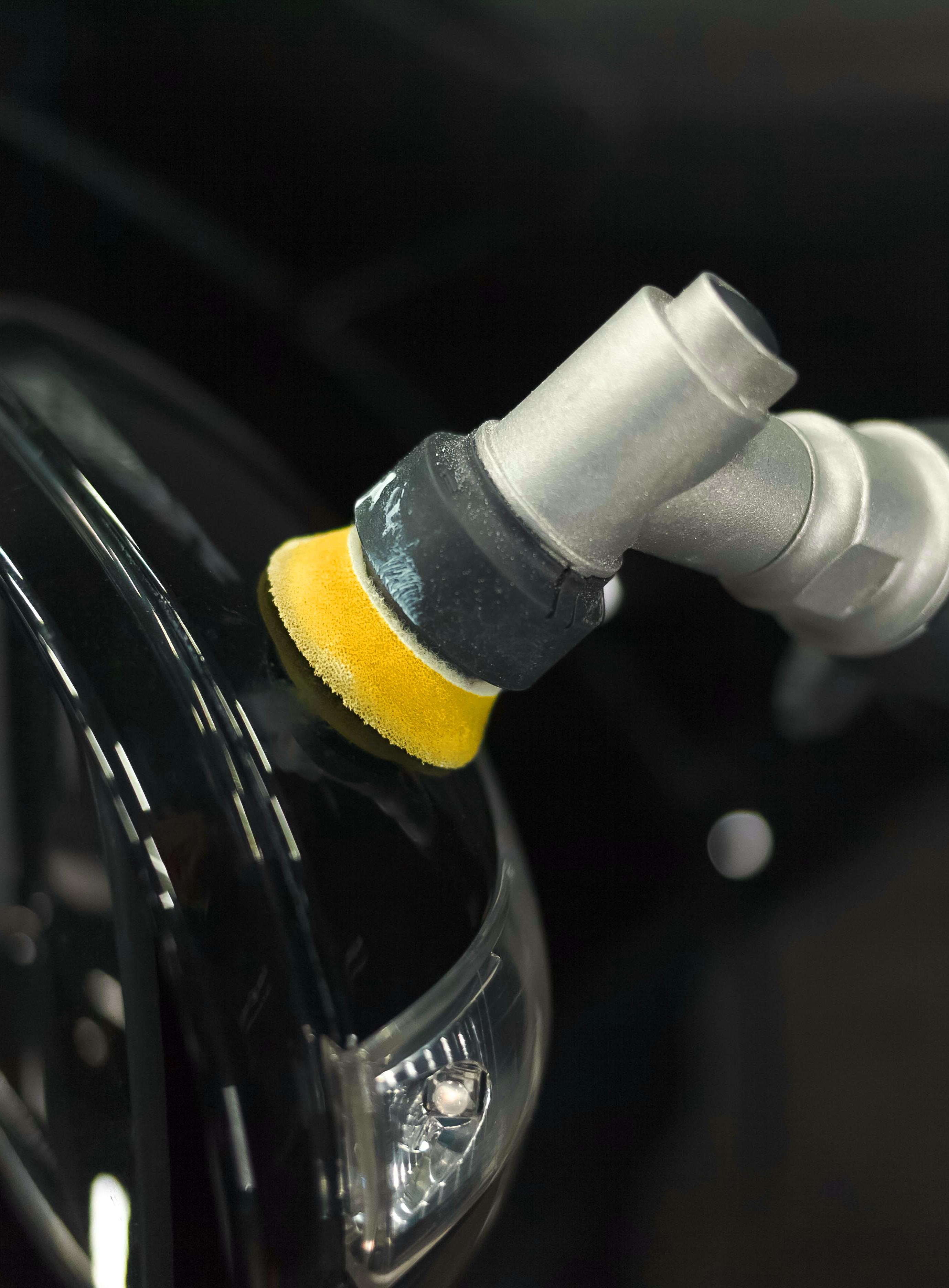
Consumer polishing products marketed as 'scratch removers' can reduce the appearance of very light swirls on soft paint, but they rarely eliminate them, and they frequently introduce their own micro-marring if applied by hand in a circular motion. A dual-action (DA) machine polisher used correctly is more effective than any hand application — but selecting the right compound and pad combination for your specific paint's hardness and the depth of the swirls requires experience.
The practical recommendation: for light swirls across one or two panels, a DA polisher with a light-cut compound and finishing pad used correctly is a manageable DIY task for a careful owner. For heavy swirling across the whole vehicle, book a 1-stage or 2-stage professional correction — the time saving and reduced risk of making the situation worse are worth the cost.
The Professional Swirl Removal Process
- —Paint thickness measurement: ensures sufficient clear coat to safely remove material
- —Paint hardness assessment: determines correct compound and pad combination
- —Test spot: a small area polished first to confirm settings before working the whole car
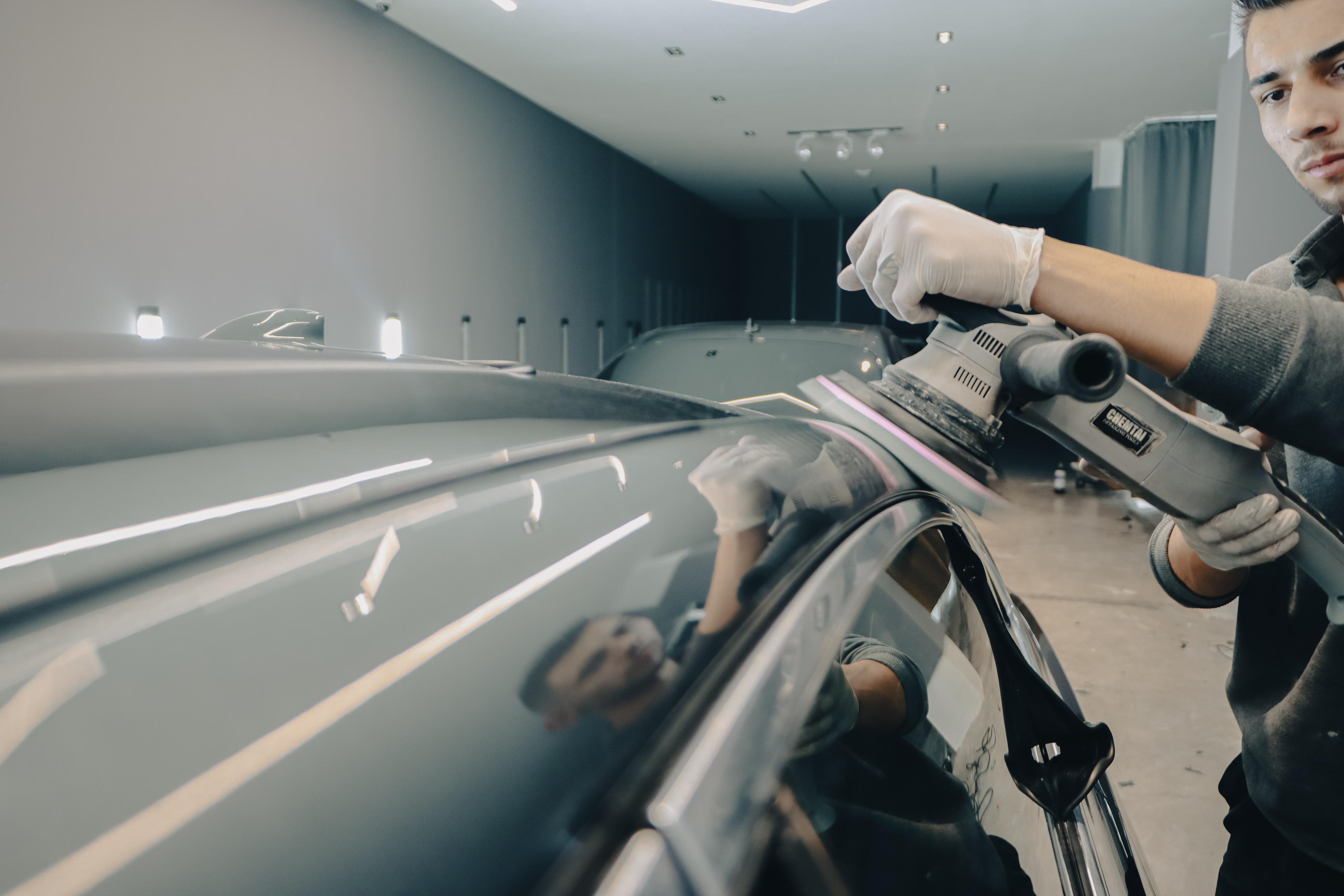
- —Machine polishing: dual-action or rotary polisher per panel, systematically from roof down
- —Inspection under dedicated lighting: LED water spot lights reveal remaining defects
- —IPA wipe: removes polish residue so the finished surface can be assessed in its true state
Preventing Swirl Marks After Correction
Once the paint is corrected, keeping it swirl-free requires a change in washing habits: use only touchless washes or hand-wash with the two-bucket method, never wipe a dusty car dry, use fresh microfibre cloths folded to a clean face for each panel, and dry with a leaf blower or waffle-weave microfibre — not a squeegee. A graphene or ceramic coating applied after correction adds a sacrificial layer that is easier to clean without abrasion.
Frequently Asked Questions
Are swirl marks a warranty issue?
No — swirl marks are caused by washing and handling, not manufacturing defects. They are not covered by vehicle warranties or PPF warranties. They are a maintenance issue.
Does a black car show swirls more than a white car?
Dramatically so. Swirl marks are visible because they scatter light differently from an undamaged surface. On a black car, this contrast is extreme. On white or silver metallic finishes, swirls are significantly less visible in normal light but still present and still remove clear coat when polished out.
Questions about your own car?
Ask on WhatsApp