Graphene vs Ceramic
Is Graphene Really Better,
Or Just Marketing?
The difference is real and measurable — especially in a climate that pushes surface temperatures past 50°C for months at a time.
| Graphene | Standard Ceramic | |
|---|---|---|
| Hardness | 10H | 8–9H |
| Heat dissipation | Superior — engineered for extreme climates | Good, degrades faster under sustained heat |
| Typical lifespan in Dubai | Up to 5 years | 12–18 months |
| Hydrophobic performance | Holds significantly longer | Fades faster with UV exposure |
| Molecular bond | Denser bond with clear coat | Standard bond |
Why This Matters More Here Than Anywhere Else
With a UV index exceeding 11 for months at a time and surface temperatures reaching 50°C, ordinary protection fails faster than it does anywhere with a milder climate. Standard ceramic coatings typically last 12–18 months here under that kind of intense UV and heat.
Graphene's molecular structure forms a denser bond with the clear coat and dissipates heat more effectively — which is why it holds up to 5 years under the same conditions.
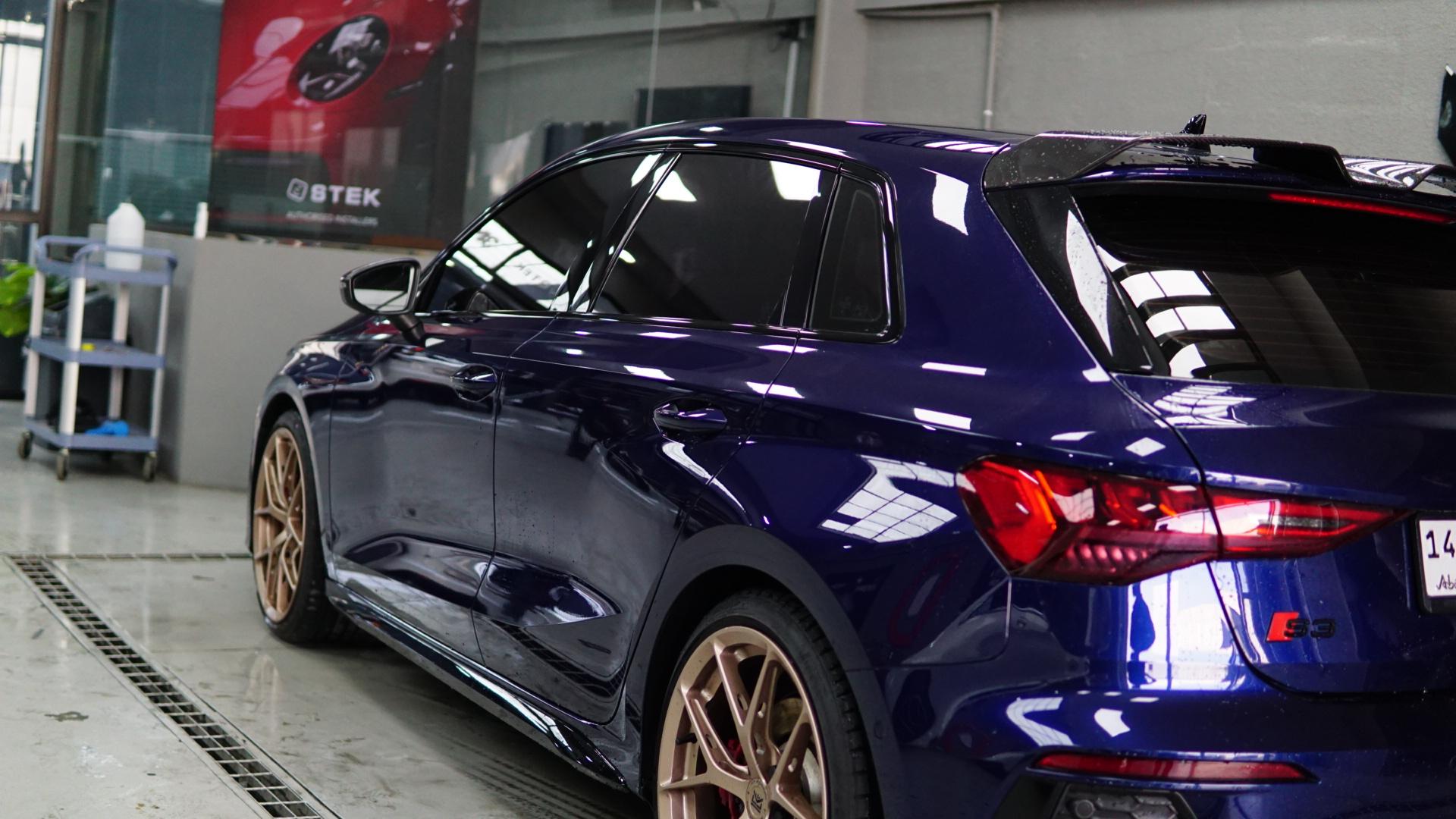
Our Honest Take
If you're keeping the car more than 18 months and driving it daily in Dubai heat, graphene's longer lifespan makes it the better value even at a higher upfront price. Both start with the same non-negotiable step — full paint correction — which we include in every graphene package, not as an upsell.
Graphene Questions