10 July 2026 · Graphene Coating · Dubai · Car Protection
Graphene Coating Dubai: The Complete 2025 Guide
Graphene coating is the most advanced form of nano-coating available for cars today. In Dubai's climate — where surface temperatures routinely exceed 80 °C in summer and UV index hits extreme levels for six months of the year — graphene's properties make it substantially better than conventional ceramic coating for long-term protection.
- —Graphene runs cooler on the panel surface than ceramic — up to 10 °C lower under direct sun
- —Higher hardness (9H–10H rating) means better scratch resistance on dusty Dubai roads
- —Anti-static properties repel the fine sand that clings to ceramic-coated cars
- —Hydrophobic effect is stronger and lasts longer in the UAE's alkaline water conditions
- —Typical investment: AED 999–3,500 depending on vehicle size and prep required
What Exactly Is Graphene Coating?
Graphene is a single layer of carbon atoms arranged in a hexagonal lattice — one of the strongest materials ever tested by scientists. When added to a ceramic coating matrix, graphene dramatically improves flexibility, hardness, heat dissipation, and anti-static performance compared to a pure ceramic formula.
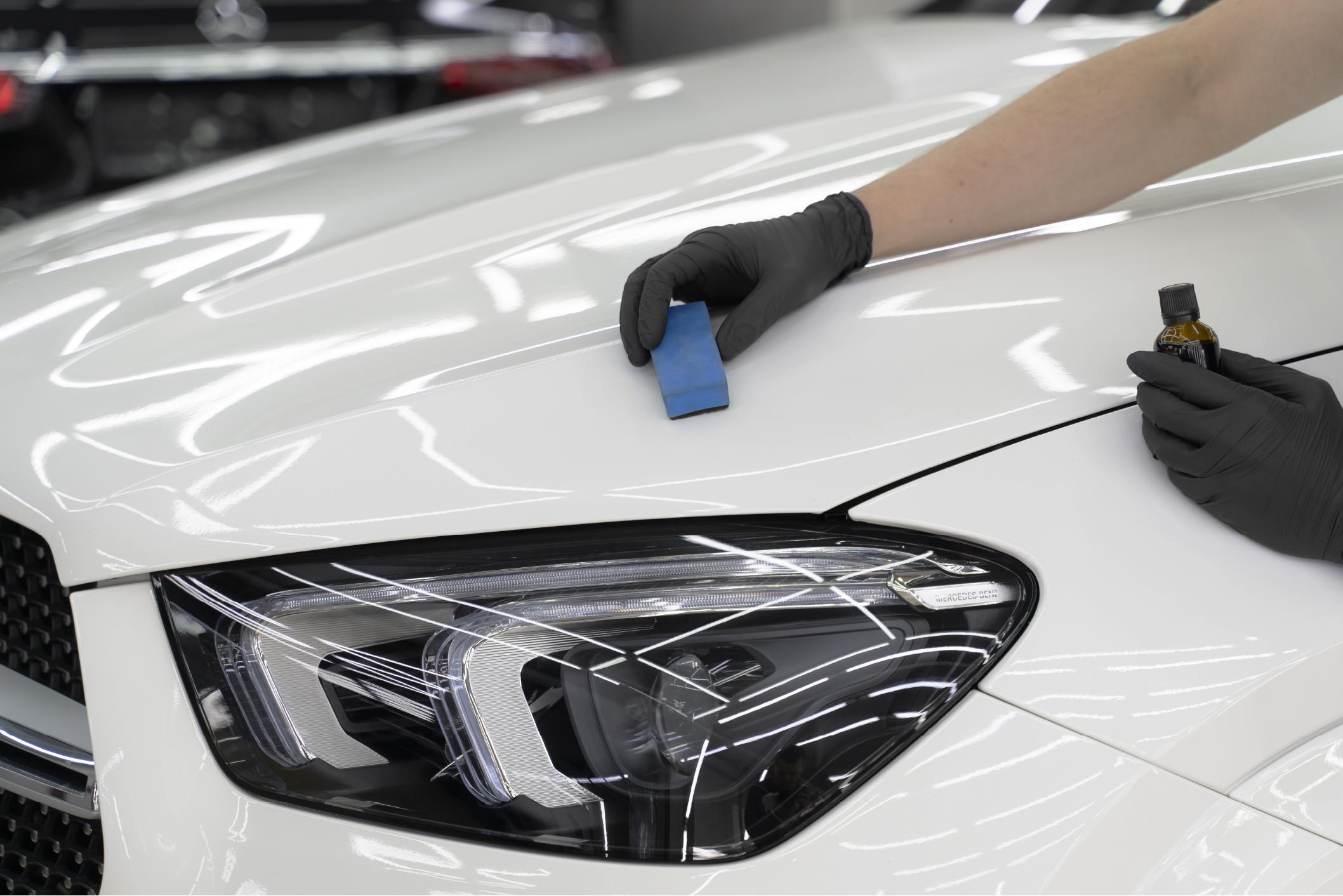
A graphene coating is applied as a liquid to the car's paint surface. It bonds chemically, creating a hard, slick, protective layer that is measured in microns but delivers millimetre-thick protection benefits. Unlike wax or sealant, it does not sit on top of the paint — it bonds to it.
Why Dubai Specifically Demands Graphene Over Ceramic
Standard ceramic coatings work well in temperate climates but face two specific challenges in the UAE. First, heat: ceramic coatings can develop micro-cracks over time when repeatedly thermally cycled between extreme heat and air-conditioned environments. Graphene's lattice structure is more flexible under thermal stress and dissipates heat from the surface more efficiently.
Second, dust. Dubai's fine silica-rich sand is electrostatically charged. Ceramic coatings are slightly positive in charge, which attracts this dust. Graphene is charge-neutral to slightly negative, meaning it actively repels the same particles. After a day of outdoor parking in Jumeirah or DIP, a graphene-coated car sheds dust; a ceramic-coated car collects it.
How Graphene Coating Is Applied at Detailing Dynamics
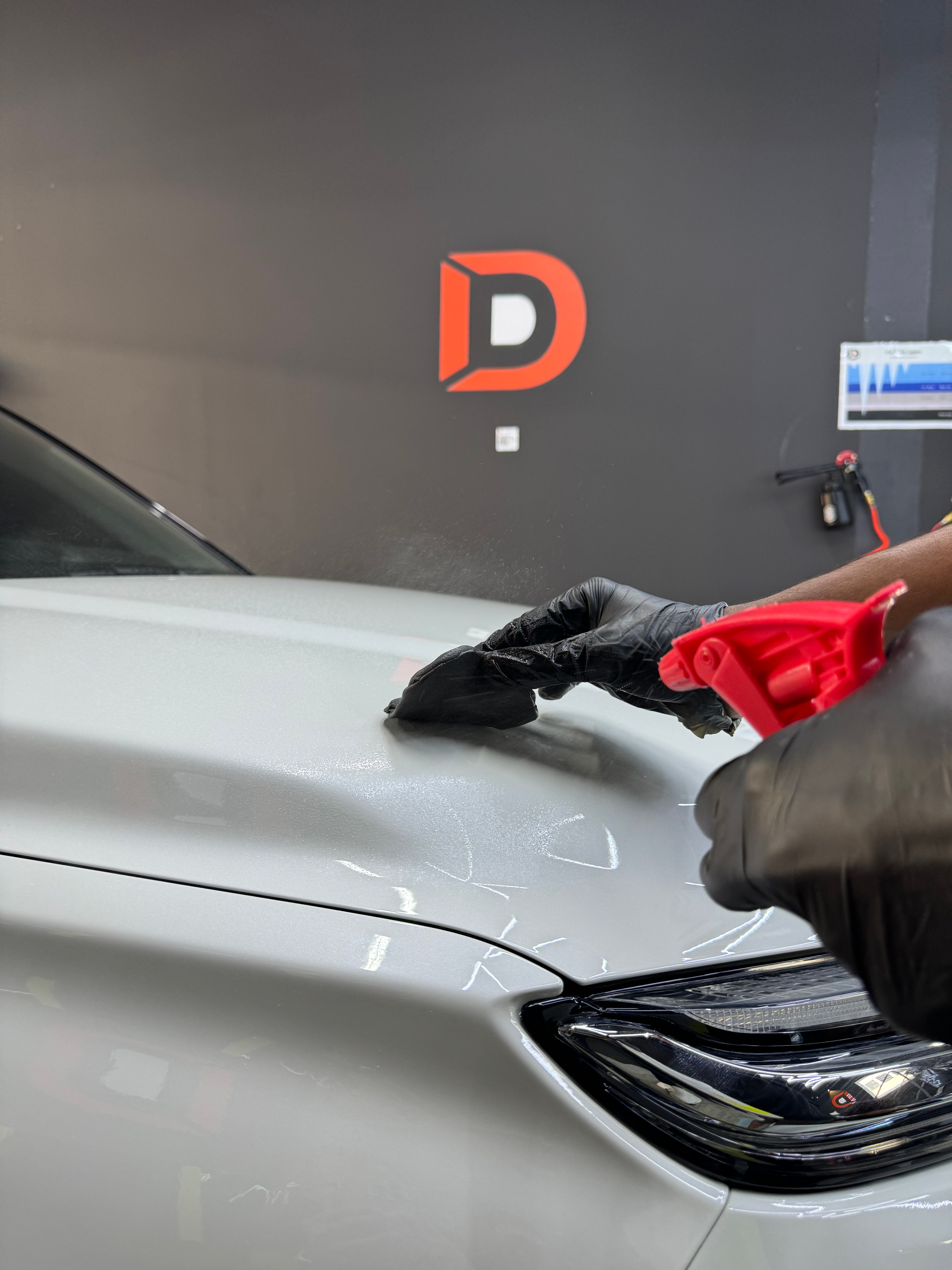
Application follows a strict multi-stage process. The car is first decontaminated using an iron remover and clay bar to strip embedded fallout. Paint correction is performed to remove swirl marks — graphene coating locks in the paint's condition permanently, so any defects present at coating time will remain visible. Once the surface is perfectly prepared, the graphene formula is applied panel by panel in a controlled environment, then levelled and cured. Total time is typically one to two days depending on the extent of paint correction needed.
Graphene Coating Cost in Dubai
At Detailing Dynamics, graphene coating starts from AED 999 for a small saloon and ranges to AED 3,500 for large SUVs, depending on size and the level of paint correction required. Some studios quote lower prices but include minimal paint prep — the coating is only as good as the surface under it. Ask any studio what is included in the prep stage before comparing prices.
How Long Does Graphene Coating Last?
With proper maintenance, a professionally applied graphene coating in Dubai typically lasts 3–5 years. Some premium formulas carry 5-year warranties. Annual maintenance washes and a top-up sealant every 18–24 months extend effective protection significantly. The anti-static and hydrophobic properties are the first to diminish — if you notice water sheeting less aggressively or dust clinging more stubbornly, it is time for a maintenance service.
Frequently Asked Questions
Can graphene coating be applied to matte paint?
Yes, but only a formula specifically designed for matte finishes. Standard graphene coatings add gloss and will alter a matte surface. Always confirm with your installer before booking.
Does graphene coating prevent stone chips?
No. Coatings — graphene or ceramic — protect against UV, oxidation, water spotting, and minor surface contaminants. Only PPF absorbs the impact energy of stone chips. Many owners apply PPF to high-impact zones and graphene coating over the rest of the car for comprehensive protection.
How long after application before I can wash the car?
Typically 5–7 days. The coating needs time to fully cure before water or chemical contact. Your installer will give you a specific aftercare instruction sheet.
Questions about your own car?
Ask on WhatsApp